Why Fireplace Walls Crack Differently Than Other Walls
Regular drywall cracks from settling or impact or moisture. Fireplace wall cracks are almost always about heat cycling — the wall gets hot when the fireplace runs, the framing and drywall expand slightly, and then they contract when it cools down. If that happens repeatedly over years, it creates stress at consistent points, usually corners and seams.
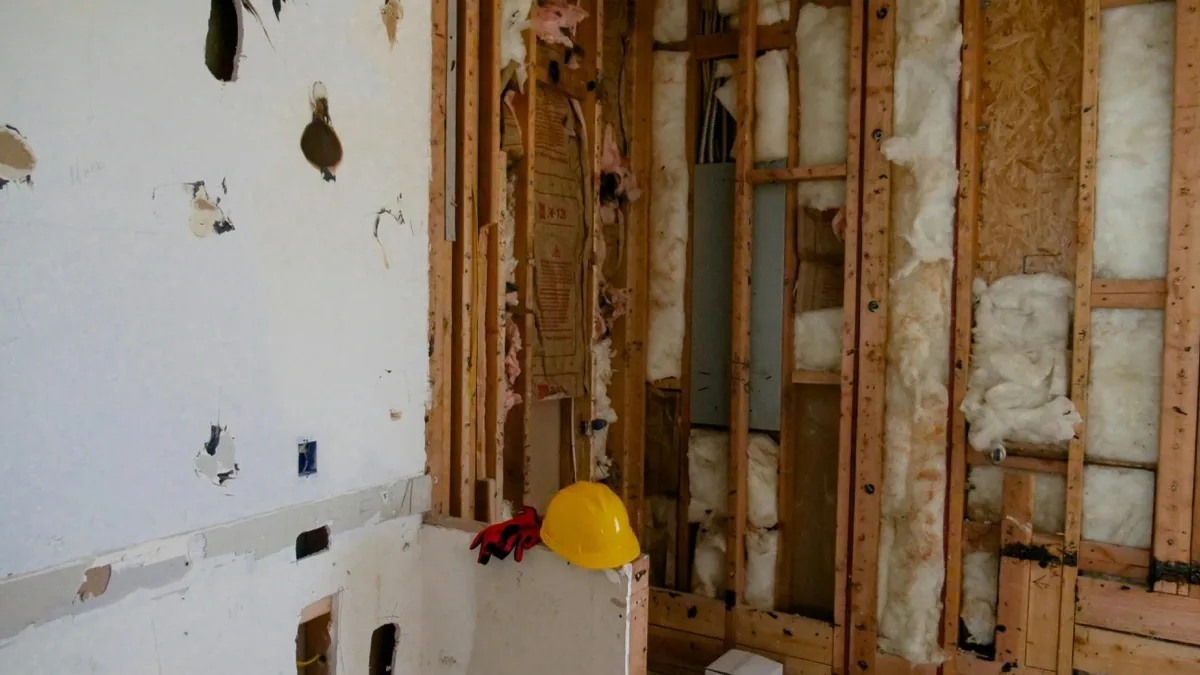
In older homes the framing around the fireplace is often a different species of wood than the rest of the house, or it was installed at a different moisture content. Mine had some original framing from 1978 mixed with newer lumber from a previous renovation. Different wood moves differently. That inconsistency makes the corners even more vulnerable.
The other thing Steve pointed out is that most fireplace surrounds and mantels are attached to the framing somewhat independently from the drywall. So you've got two materials that move at slightly different rates, and the drywall is caught in between. The crack you see is the drywall losing that battle every winter.
Standard joint compound and spackle are brittle once they cure. They fill the crack fine, but they don't flex. So when the wall moves again next season, they crack right back along the same line. This is why standard repairs fail here.
What I Tried That Didn't Work
My first four attempts at fixing the cracks were variations on the same wrong approach. Spackle, prime, paint. Sometimes I used setting compound instead of spackle. One year I applied fiberglass mesh tape and buried it in all-purpose compound. All of these held for about a season and a half before the crack returned.
Year four I got confident and used a flexible paintable caulk instead of compound. I figured if the problem was rigidity, caulk would solve it. That worked for almost two full seasons. But when it finally failed it looked worse than the compound repairs — the caulk pulled away unevenly and left a ragged gap instead of a clean crack.
What I was missing was that the caulk was flexible but I was still applying it as a surface-level fix. The movement was happening deeper in the wall — at the framing level — and a surface patch, flexible or not, was just delaying the inevitable.
The Repair Approach That Finally Held
Steve walked me through what he'd seen work in homes he'd been in. The key insight was that around a fireplace, you need to treat the junction between the drywall and the surround as a designed expansion joint, not a seam to be filled.
Here's what I did on the sixth attempt, which has now held through two heating seasons:
First, I removed the old compound from both cracks completely — chiseled it out and widened the gaps slightly so I was working with clean edges. Then I cut back any loose or raised paper facing. I let everything dry for two days because the area around a fireplace tends to absorb some moisture from normal humidity variations.
Instead of filling the crack, I applied a thin bead of paintable flexible sealant (I used DAP Alex Plus) and tooled it smooth. But I left it as a joint — I didn't try to bury it in compound or hide it under mesh tape. Then I feathered the adjacent compound very lightly to blend the surrounding area, but I kept the actual crack line as a deliberate joint.
After priming with a shellac-based primer (Zinsser BIN), I painted. The crack is technically still there as a very fine line if you look closely, but it doesn't open, doesn't grow, and hasn't needed touching in two years. The sealant flexes with the seasonal movement instead of fighting it.
The total cost for this repair was about $18. The previous five repairs cost roughly the same each time. If I'd done this right the first time I'd have saved about $90 and a lot of fall weekends.
When Fireplace Cracks Are Actually Serious
Most fireplace wall cracks are cosmetic. But some aren't, and it's worth knowing the difference before you grab a caulk gun.
Cracks in the firebox itself — the brick or firebrick lining — are a different category entirely. These can allow heat and gases to reach combustible framing. If you see cracks inside the firebox, get a chimney professional to look at it before using the fireplace. The National Fire Protection Association publishes guidelines on this, and the CSIA (Chimney Safety Institute of America) has a good overview of what different types of firebox cracks mean.
Horizontal cracks in the surrounding drywall, especially if they run along framing lines, can indicate structural movement rather than just thermal cycling. If a crack is getting wider over time rather than opening and closing seasonally, that's a different problem. So is any crack accompanied by doors or windows that have started sticking, or floors that feel uneven near the fireplace. Those are signs to bring in a structural engineer, not a drywall knife.
The diagonal cracks I've been describing — running from the corners of the surround outward — are almost always thermal. Vertical cracks at seams near the surround are usually also thermal. Horizontal cracks along the wall well above the firebox, or cracks that feel like the wall is actually separating from the ceiling, deserve more investigation.
A Note on Heat-Resistant Compound
After I started writing about this, a couple of people asked me about heat-resistant drywall compound. It exists — it's used in some commercial applications near high-heat areas — but for a standard wood-framed home fireplace it's not what's needed and not worth the cost or sourcing hassle.
The issue isn't that the compound is failing because of heat exposure. Normal fireplace operation doesn't get the surrounding drywall hot enough to break down standard joint compound. The problem is mechanical stress from movement, and heat-resistant compound doesn't address that any better than regular compound.
If you have a fireplace that's running more than twelve hours a day, or an unusually hot insert, that might change the calculation. But for a typical wood-burning or gas fireplace used seasonally, stick with the flexible sealant approach. It's cheaper, easier to source, and actually addresses the right problem.