Stopping the Leak Before Touching the Ceiling
I almost made a bad mistake right away. My first instinct was to cut out the wet drywall before I even understood the source. My brother-in-law Wes, who has done more home repair than I have, talked me out of it. His point was simple: until you know the water has stopped, replacing the ceiling is pointless because you'll be doing it again in six months.
I called a plumber that Monday. Carlos came out Tuesday morning and pulled the toilet in about ten minutes. The wax ring had failed and the flange was sitting too low because of a previous tile job. He replaced both for $215, including the service call. That part I will gladly pay a professional to do.
The Gypsum Association notes that water-damaged drywall almost always needs replacement rather than just drying out, because the paper face supports mold growth and the core loses structural integrity once it has absorbed enough water to sag. More on that at gypsum.org. After I read that I stopped second-guessing the decision to cut the bad section out.
Cutting Out the Damaged Section
I waited four days after the plumbing fix before opening up the ceiling, just to make sure nothing was still dripping. By that point the brown ring had grown a little and the sag was more obvious.
I drew a rectangle around the damaged area with a pencil, sized to land on the ceiling joists on both long sides. This is the part people skip and regret. If your patch edges aren't backed by joists, you have to install furring strips or wood backers behind the drywall, and that adds time. I used a stud finder to mark the joists first, then sized the cutout to span between them. The final rectangle was about 18 inches by 30 inches.
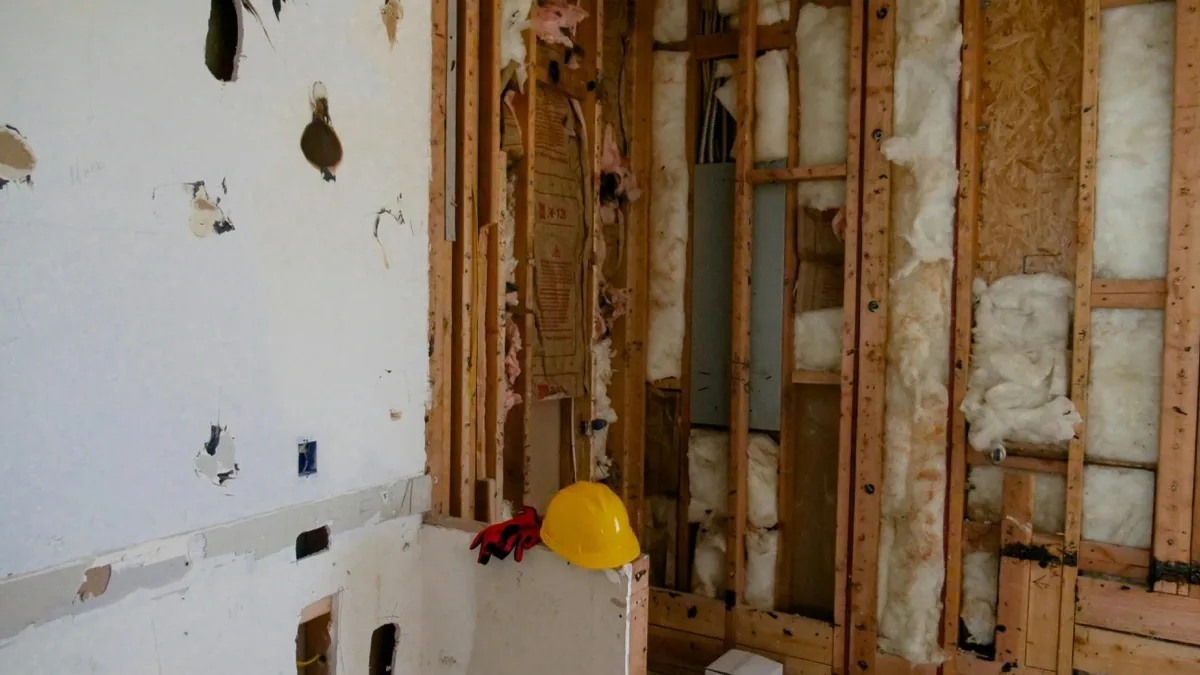
I cut the perimeter with a utility knife scored several passes deep, then finished through the back paper. A drywall saw works too, but a utility knife produces less dust and keeps things cleaner. When I pulled the piece down, water-soaked insulation came with it and dropped on my head. Wear safety glasses. Wear an old shirt. Have a contractor bag open and on the floor before you start.
What I Found Inside
The subfloor above was darker than the surrounding wood but not soft. The joists looked fine, no rot or active moisture. The insulation was completely saturated and weighed probably ten pounds when I pulled it out. I tossed it. Wet insulation has zero R-value and is a mold farm waiting to happen.
I let the cavity air out with a fan running for two days before installing new insulation. The subfloor stain stayed but the wood was dry to the touch and a moisture meter (I borrowed Wes's) read 11 percent, which is normal for indoor framing.
Patching the Ceiling
I cut a new piece of 1/2 inch drywall to fit the opening, leaving about 1/8 inch of gap on all sides for joint compound. I used 1 1/4 inch coarse thread drywall screws into the joists, spacing them about 8 inches apart. Six screws total along each joist.
The taping was the part I had trouble with. Ceiling work is harder than wall work because gravity is fighting you the whole time and mud wants to fall on your face. I used paper tape for the seams, applied with USG Sheetrock Plus 3 lightweight mud. Three coats total, sanding lightly between the second and third coat with a 220 grit sanding sponge.
The trickiest part was matching the existing ceiling texture. Our dining room has a light orange peel that was sprayed when the house was built. I bought a small can of texture spray at Home Depot for $12 and practiced on a piece of cardboard until the spatter pattern looked close. Even then, my patch is slightly visible if you stand directly under the light fixture and look up. From normal angles, you can't tell.
The Cost Breakdown
Here is what I actually spent, with receipts:
Plumber to replace wax ring and flange: $215. Drywall sheet (I only needed a piece, but Home Depot doesn't sell partial sheets): $14. Joint compound, 4.5 gallon bucket: $18. Paper tape, 250 foot roll: $5. 1 1/4 inch coarse drywall screws, one pound box: $7. R-13 fiberglass batt insulation: $15. Orange peel texture spray can: $12. Primer, one quart: $11. Ceiling paint, one quart: $22. Drop cloths and miscellaneous: $21. Total: $340.
If I'd needed to replace the toilet or had ended up with rotten joists, this would have been a much larger number. I got lucky on the structural side because I caught the leak relatively early. A slow drip behind a wall can run for months before showing up. The This Old House team has a good walkthrough on identifying hidden water damage at thisoldhouse.com if you want to learn the warning signs.
What I'd Do Differently
I'd act on the spongy floor comment immediately instead of filing it for later. The repair would have been smaller. The ceiling stain only formed because the leak ran long enough to saturate the subfloor, then the insulation, then finally show up downstairs. If I'd pulled the toilet in early March instead of late March, there's a decent chance I would have caught a damp wax ring before the ceiling failed.
I'd also rent a drywall lift for the ceiling patch. I held the piece up with my shoulder while running screws and my neck was sore for two days. A panel lift is something like $40 a day at Home Depot rental. For a single small patch it was overkill, but I'll rent one next time I do ceiling work because the comfort difference is real.
The texture match would benefit from practice. The first time you spray orange peel, the pattern is wrong. The second time it's closer. By the fifth practice card it's pretty good. Don't try to nail it on the actual ceiling on attempt one. Spray cardboard until it matches, then move to the real surface.