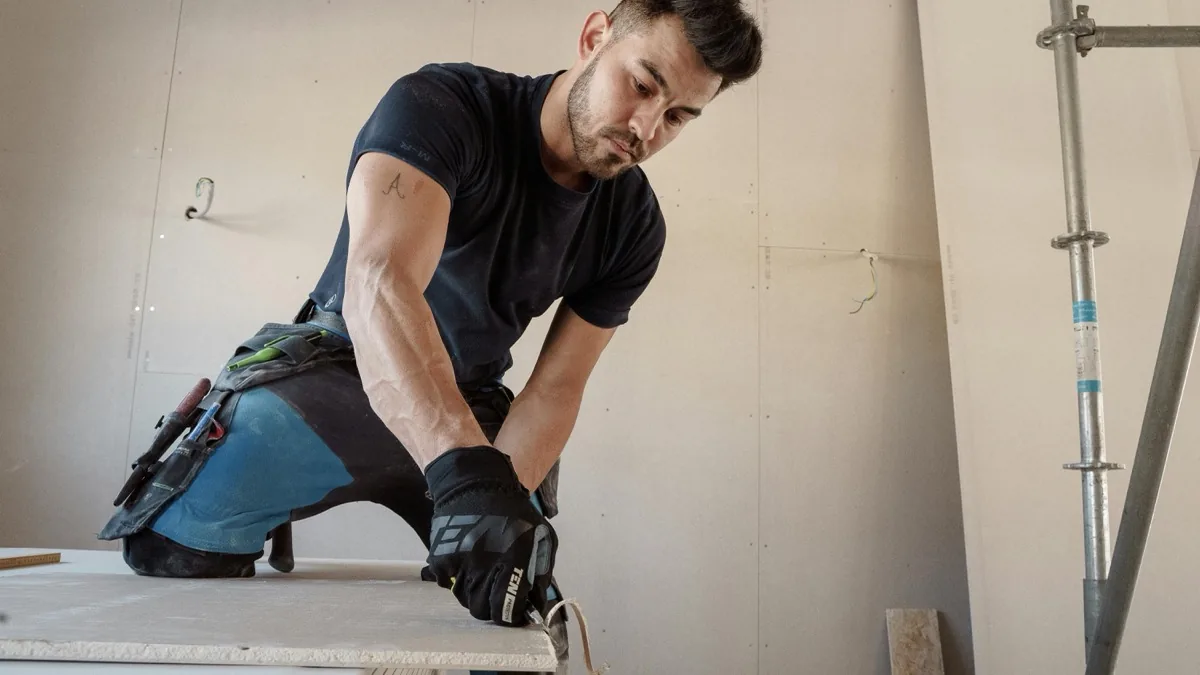
When You Need Backing Behind Drywall
Any fixture that weighs more than 50 pounds needs solid backing. The Gypsum Association recommends solid wood backing for all heavy-mount applications. This includes:
- Large TVs and heavy artwork
- Floating shelves that will hold books or dishes
- Bathroom grab bars
- Kitchen upper cabinets
- Wall-mounted toilets or urinals
- Heavy mirrors
The rule I follow: if you have to ask whether it needs backing, it probably does.
Installing Wood Blocking Between Studs
The standard method is horizontal blocking between studs. Here is the process I use:
- Measure and mark your fixture location on the studs
- Cut 2x6 lumber to fit snugly between studs (usually 14.5 inches for 16-inch centers)
- Position blocking at the exact height where screws will go
- Toenail or use angle brackets to secure blocking to studs
- Mark the floor directly below each piece of blocking
That last step saves headaches later. Once drywall covers everything, you need to know where your backing is. Floor marks let you measure up accurately.
Metal Stud Wall Solutions
Metal studs present a different challenge. You cannot just toenail blocking between them like wood framing. Options include:
- Plywood backer boards screwed through both flanges of adjacent studs
- Commercial backing plates designed for metal framing
- Through-bolt assemblies that clamp from both sides
My brother-in-law has a condo with all metal studs. When he wanted to mount his TV, we used a piece of 3/4-inch plywood cut to span three studs. Screwed it in with self-drilling metal screws before hanging the drywall over it. Solid as a rock.
Retrofit Backing When the Wall is Already Finished
Sometimes you inherit a house without backing where you need it. You have two options. First, you can cut a rectangle in the drywall, install blocking, patch the hole, and refinish. It is the right way but takes time.
Second, you can use a wall mount designed to span multiple studs. These distribute the load across several points instead of relying on backing. They cost more and stick out further from the wall, but avoid the drywall repair.
For bathrooms where grab bars are going in, cutting and patching is usually worth it. Safety fixtures need solid attachment.
Common Backing Mistakes
I have made most of these mistakes at least once:
- Installing blocking too high or low for the fixture
- Using 2x4s instead of 2x6s (less margin for error)
- Forgetting to mark locations before drywalling
- Not checking that blocking is level
- Using drywall screws instead of construction screws to secure blocking
The marking issue bit me on my first bathroom remodel. I installed perfect backing for the toilet paper holder, then drywalled over it. Spent 20 minutes with a stud finder trying to locate backing that was 4 inches to the left of where I expected.