All-Purpose Joint Compound
All-purpose joint compound, made by brands like USG and National Gypsum, is the workhorse of drywall finishing. It handles embedding tape, filling joints, and final coats. If you only buy one type of mud, this is it.
The stuff comes pre-mixed in buckets ranging from 1 gallon to 5 gallons. A 4.5-gallon bucket runs about $8 to $12 at most hardware stores. Dale at my local store always points people to all-purpose first. "It's forgiving," he says. "You can sand it, skim over mistakes, take your time."
Drying time depends on humidity and thickness. Thin coats dry in 12 to 24 hours. Thick globs can take two or three days. I learned to check by touch. If it's cool to the touch, it's still wet inside even if the surface looks dry.
Lightweight Joint Compound
Lightweight compound weighs about 35% less than regular all-purpose. The difference is air bubbles mixed into the formula. Same bucket size, much easier to lift.
Price runs a couple dollars higher. You're looking at $11 to $15 for a 4.5-gallon bucket. Neighbor Greg swears by the lightweight stuff exclusively. He's got a bad shoulder from a car accident twenty years ago, so the weight matters to him.
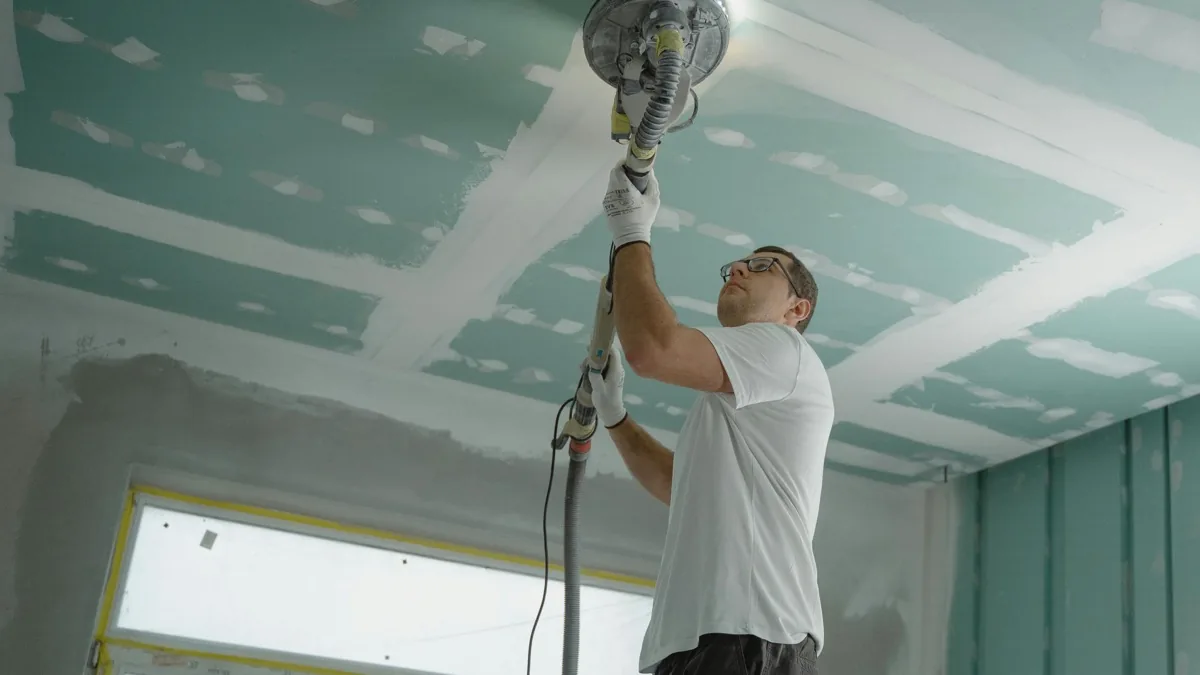
The real advantage isn't the bucket weight though. Lightweight sands beautifully. Almost too easy. I've accidentally sanded through to the tape more than once because the stuff comes off so smooth.
Topping Compound
Topping compound is made specifically for final coats. Lower shrinkage. Smoother finish. Sands even easier than lightweight.
You won't find this in as many stores. It's more of a pro product. Expect to pay $12 to $16 per bucket. Uncle Frank uses topping compound for his third coat every time, no exceptions. He's been finishing drywall for forty years and he gets glass-smooth results.
The stuff spreads thin and feathers out to nothing at the edges. That's what you want for final coats. Invisible transitions between compound and bare paper.
Not for Tape Bedding
Topping compound will not hold tape properly. It doesn't have the bonding strength. I made this mistake once on a ceiling patch. The tape bubbled up within a week. Had to scrape everything off and start over with all-purpose.
Setting Compound (Hot Mud)
Setting compound uses a chemical reaction instead of evaporation to harden. You buy it as powder and mix with water. The numbers on the bag tell you working time. "20" means 20 minutes. "45" means 45 minutes. "90" gives you an hour and a half.
That first disaster with Uncle Frank's 45-minute hot mud taught me something. These time ratings are for professionals who already have their technique down. A beginner should buy 90-minute minimum. Even then, work in small batches.
Price varies by set time. Faster setting costs more. A 25-pound bag runs $12 to $18. That sounds expensive until you realize it makes a lot of mud and you're not waiting overnight between coats.
Why Hot Mud Exists
Same-day second coats. That's the main reason. Regular mud takes 24 hours to dry. Hot mud sets in under two hours depending on the variety. You can apply three coats in a single day if you time everything right.
It also shrinks less than regular compound. Much less. For deep holes or built-up areas, hot mud fills without cracking.
The Catch
Hot mud is harder than regular compound when cured. Sanding it is work. If you don't get your finish coat smooth while wet, you'll be grinding away with the sander. Eli refuses to use it for final coats for exactly this reason.
Also, you can't save mixed hot mud. Once water hits powder, the clock starts. Any leftover gets tossed. Mix small batches until you know your pace.
Which Mud for Which Coat
Here's what I've settled on after fifteen years of DIY:
First coat, embedding tape: all-purpose or hot mud if you're in a hurry. Second coat: all-purpose works fine, or hot mud to speed things up. Third coat: lightweight or topping for easy sanding.
Greg uses all-purpose for everything and just deals with the harder sanding. Uncle Frank uses hot mud for coats one and two, topping for coat three. Eli uses whatever his clients already have on site, but pushes for lightweight when he has a choice.
There's no single right answer. But there are definitely wrong ones. Using topping for tape embedding is wrong. Using 20-minute hot mud when you're still learning is wrong. Beyond that, experiment and find what works for your speed and your arm strength.